
Listening at scale, listening with purpose

When we listen to one young person, we hear an individual story. That story matters because it helps us understand what life feels like for that child: their relationships, challenges, strengths and aspirations. Individual voices remind us that every child deserves to be heard on their own terms.
When we listen to hundreds of children and young people, those individual stories begin to reveal something different. Patterns emerge. We start to understand not only what helps children thrive, but also where the care system is succeeding and where it still has work to do.
Bright Spots gives us a unique perspective on children's experiences of care. I warmly welcome the publication this month (November, 2026) of the Bright Spots Scotland reports which complement the wider UK findings and further enrich our understanding of the experiences and outcomes of care experienced children and young people.
Together, these insights provide a clearer picture of what supports children and young people to thrive.
More than research: an improvement framework
One of the things I value most about the Bright Spots Programme is that it was never designed simply to collect data. From the beginning, its purpose has been to support improvement.
Local authorities take part because they want to hear directly from children and young people and use what they say to inform strategic planning, service development and practice. The surveys ask children and young people about their lives and wellbeing, focusing on the things they say are important to a good life: feeling safe, having people who care about them, being listened to, having supportive relationships and feeling positive about the future.
What we have learnt
One of the most important findings from more than a decade of Bright Spots research is that wellbeing is rooted in relationships, belonging and opportunity. The evidence points to seven key drivers of wellbeing: good emotional and mental health support, strong connections with family and friends, trusted carers, trusted workers, feeling safe and at home, being involved and informed, and having opportunities to learn and grow[L
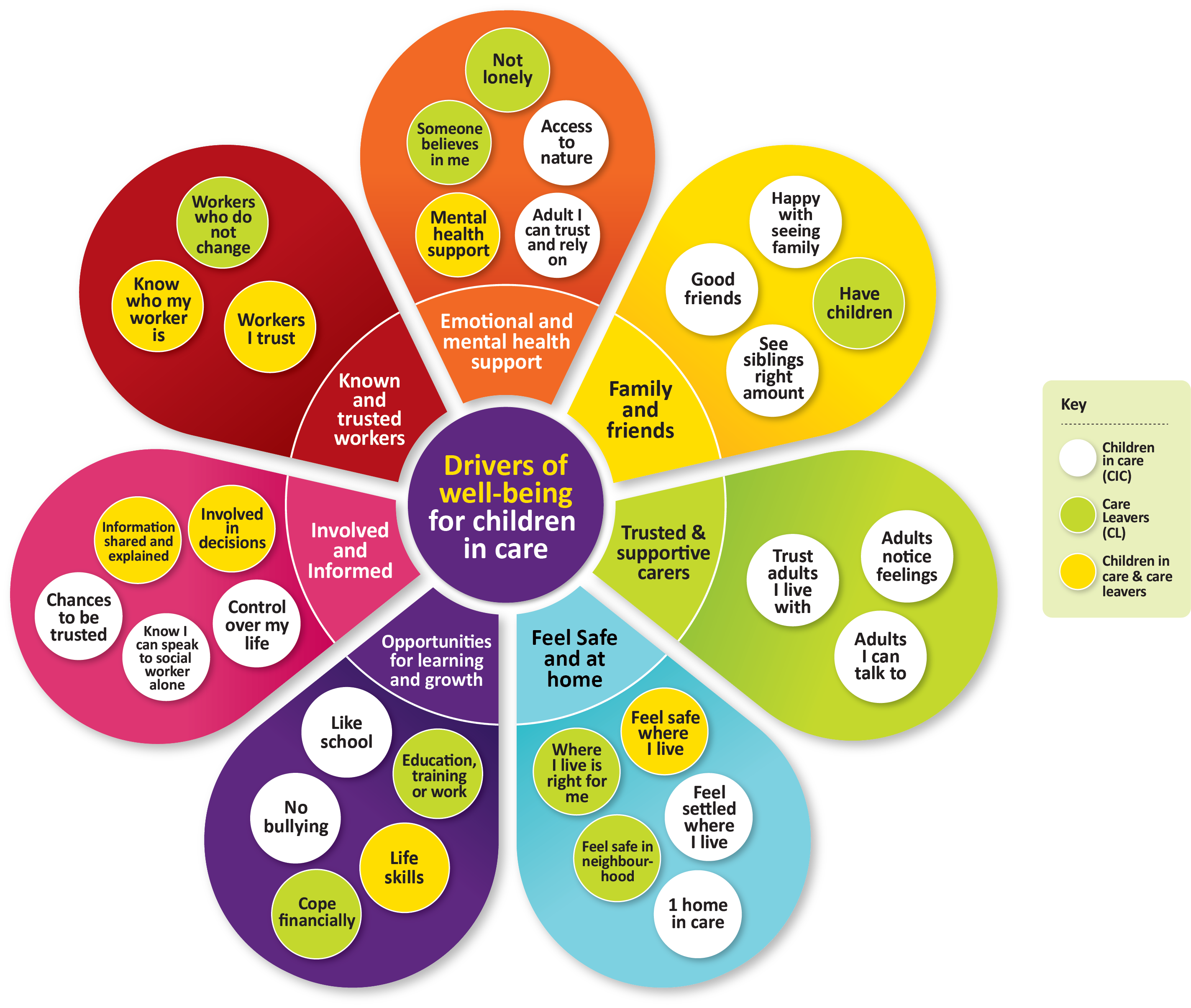
The consistency of these messages across time and place is striking, including in the newly published reports from Scotland.
While every child's story is different, the foundations of a good childhood are remarkably universal.
Turning children's voices into action
Listening is only meaningful when it is accompanied by action. Bright Spots provides local authorities with evidence that can be benchmarked over time and compared with findings from other areas. For authorities taking part in multiple survey cycles, this means being able to track progress and understand whether changes are making a difference.
Corporate parenting recognises that supporting children in care and care leavers is a shared responsibility across the local authority and partner agencies, not just children's social care. In many ways, Bright Spots embodies what good corporate parenting should look like. Good parents do not simply ask children what they think. They listen carefully, reflect on what they hear and act on it.
Children and young people should not have to repeat the same concerns without seeing change. Their experiences should be central to how services are designed, delivered and improved.
So, are local authorities listening?
There are encouraging signs that many are.
The Bright Spots model actively encourages a "You said... We will..." approach, helping local authorities translate findings into commitments and improvement plans. The Bright Spots Resource Bank contains more than 100 examples of how local authorities have responded to what children and young people have told them.
What I find particularly encouraging is seeing authorities move beyond viewing the survey as an endpoint and instead treating it as an ongoing conversation. It’s great to see examples emerging from Scotland of what the pilot local authorities have been doing, including in Aberdeenshire, adding to the many changes and new activities being taken forward across the UK such as Sheffield’s reverse scrutiny panel, Hull’s wellbeing walks and how Stockport is working to help care leavers feel safer in Stockport.
Measuring what matters
For me, perhaps the most powerful aspect of Bright Spots is that it challenges us to rethink how we assess effectiveness in children's social care.
Traditional measures focus on what has happened to children and young people; educational attainment, placement stability and health outcomes are all important, but they only tell part of the story.
Bright Spots asks a different question: how do children and young people feel about their lives?
By bringing together the voices of care experienced children and young people, like these local authorities in Scotland have just done, Bright Spots can help shift attention towards what really matters. Most importantly, it demonstrates that listening is not an optional extra. It is a fundamental part of good corporate parenting.
When children and young people have the agency, support and opportunity to share their experiences, they do more than tell us what life is like. They help us understand what needs to change. And when services are willing to listen and respond, those voices become one of the most powerful drivers of improvement that we have.
After hearing from more than 30,000 children and young people across the UK, the message from Bright Spots is remarkably clear: listening matters. But what matters most is whether we are prepared to act on what we hear.
Access the Bright Spots Scotland reports
Read the blog posts from the local authorities who took part *button link to be added when available*
The views expressed in this blog post are those of the author/s and may not represent the views or opinions of CELCIS or our funders.
Commenting on the blog posts
Sharing comments and perspectives prompted by the posts on this blog are welcome. CELCIS operates a moderation process so your comment will not go live straight away.