

Glossary
Some words or phrases have a specific meaning within the context of Active Implementation or refer to particular theories or practices. Definitions and explanations can be found on a specific glossary document when the word or phrase is {highlighted like this}.
The Enabling Context
The ENABLING CONTEXT – The Enabling Context is the supportive policy and organisational context. It is about considering where the change is taking place and ensuring that the environment and conditions needed are in place for it to be sustainable in the long term. This involves creating readiness and alignment across the system, whilst also building local implementation teams and feedback loops that contribute to systemic change.
Where the environment and conditions are right, a programme prospers and grows; where the conditions are not right, it stalls or falls away. If a change occurs in a context that is not adapted to support it, then it risks being altered and losing its effectiveness.
In this section, we look at the conditions that were needed for the implementation of the ANEW programme, including:
- Assessing and creating readiness for change
- Building capacity for change within the system
- Building a cascading model of support (teams)
- Building a structure for systemic change in which the information flows in a timely manner from children, parents or carers, practitioners to leaders, for the latter to remove barriers, enhance the facilitating conditions, and thus support timely improvements.
Learning from the ANEW Programme has shown that the Enabling Context can and does change very quickly, and there is a need to be attentive to it at all times. Furthermore, there is need to be attentive to it at different levels of the children’s services system.
Beginning with the strategic level, the choice of Dundee as a site for the ANEW programme considered the levels of readiness among the Dundee Community Planning Partnership. This was based on a mutual selection process where CELCIS and the Dundee children’s services planning partnership met, appraised and collectively agreed that the following conditions could be met. The conditions were:
- Addressing neglect and enhancing wellbeing is recognised as a top priority locally.
- Children’s services partner organisations have a history of working together.
- Senior leaders are committed to the programme – and demonstrate this commitment by agreeing to:
- Use implementation methodology to identify, design and implement the change programme.
- Appoint, as a minimum, two 0.5 full-time equivalent local implementation specialists to coordinate the implementation effort.
- Collect and use data related to the programme’s implementation, progress and outcomes.
- Participate in and contribute to the sharing of programme learning via a community of practice.
In retrospect, these conditions have fluctuated over the duration of the programme as competing needs and priorities come to bare. One of our key points of learning is, therefore, to more closely monitor the extent to which these strategic level conditions are in place over the longer-term, and then engage with senior leaders where they are not. To help do this, we would propose scheduling regular ‘feedback loop’ meetings with senior leaders where we could have open, two-way discussions on what was working well, what was getting in the way, and what action was to be taken to progress the programme. If the scheduled ‘feedback loop’ meetings were not going ahead with the regularity needed for the programme, we would then view this as an indication that the conditions have changed and consider whether the programme be paused or even stopped.
Similar to the approach taken at the strategic level, we made clear at the outset, via a Readiness Checklist, what conditions needed to be in place at the site level – i.e. the health visitor team, nursery or school – for the ANEW programme to be implemented. Conditions included:
- Addressing neglect and enhancing wellbeing is a top priority and aligns with its overall vision.
- Collaboration and partnership across our children, families, workforce and other agencies is central to its culture and ethos.
- Agreement to commit time and resources to the ANEW programme.
- Welcome practice to be observed and to receive feedback.
- Willingness and ability to collect, learn from and respond to data.
Each site was also encouraged and supported to take part in the development and/or use of the ANEW tools, and also in running small tests of change both at practice level and in relation to the supports provided to practitioners. Doing so had three benefits:
- contributing to the development of the usable innovation, and of the practice support infrastructure;
- building and embedding the Data Support Decision System at site level, collecting and using data for systemic change;
- the use of the tools demonstrated site’s commitment to allocating time and resource to the ANEW programme and sustaining the innovation.
Our learning is that where conditions outlined in the Readiness Checklist were not present and/or the ANEW tools were only half-heartedly used, then these issues should not be dismissed. These are strong indicators that the site is not (currently) in a position to commit to the ANEW programme and the practice implementation work with them should be paused or stopped, to prioritise the work of increasing readiness and strengthening the Enabling Context.
We have also found that initial site commitment and enthusiasm to the ANEW programme can fluctuate, with changes to key staff particularly impactful. This highlights the need to have regular meetings with each site to understand and respond promptly to any changes and support readiness, so that momentum is not lost. There may also be a need to revisit the Readiness Checklist and consider whether it is best for the site to withdraw from the programme until the conditions are right.
However, we cannot overlook the complexity that characterises the wider system which a site interacts with. The COVID-19 pandemic was a prime (and extreme) example of where the conditions required for the delivery of the ANEW programme were not conducive. Service and staff priorities and capacity changed overnight and the ANEW programme stalled as new ways of working among team members and sites took time to form. More common examples that we have also encountered are times of external inspection, organisational restructures and annual budgetary planning which divert the attention of leaders and staff, and the turnover or absence of key leaders and staff as programme understanding and commitment are (temporarily) diminished.
Building a cascading model of support
The evidence states that change does not just happen, nor can change be brought about by one person only. Change requires a cascading model of support, formed through cascading implementation teams.
To enable the implementation of new and effective practices, it was important to support change at all levels within the system. In this case, this involved frontline practitioners at site level, local implementation team, senior leaders and external expertise.
-
Establishing a local, multi-agency implementation team
To hold and drive forward the ANEW programme, a local, multi-agency implementation team was established at the outset and has been a constant throughout. While its membership has changed over the course of the ANEW programme (as people inevitably move jobs), the Dundee Implementation Team has consistently had three to five members spanning Dundee’s social work, education, and health visiting workforces.
The Dundee Implementation Team have been meeting regularly (in most cases, on a fortnightly or monthly basis), to review programme activity and data, respond to emerging issues, and plan ahead. Between meetings, members of the team have been working closely with individual sites to support practice change within health visiting teams, nurseries or schools. The team has also sought to engage with Dundee’s senior leaders on a regular basis to share learning and highlight challenging issues where strategic input is needed.
-
Establishing site implementation teams
Each nursery and school involved in the ANEW programme established a site implementation team composed of those with the named person function and other practitioners in Meeting-Buddy role, supporting the voice of children or parents/cares.
Within the Dundee Health Visiting service, the site implementation team was formed on geographical basis and included all health visitors in the East of the city, and their managers. The team also created the role of ANEW Champion, to enhance and maintain readiness within the Health Visiting service, with support from the team.
Effective leadership in individual sites proved to be key in supporting the sustainability of the new practices, and in fostering the values and principles of the approach across their setting.
-
Support from senior leaders
In order to flourish, implementation teams need support. Senior leaders provided this by engaging in regular conversations with the team, discussing learning and feedback from children, parents and carers, and professionals, including the implementation team, thus ensuring that an effective practice-policy ‘feedback loop’ was in place.
By ringfencing time for team members to progress the work and giving the team permission and resources to try new and different things, senior leaders can remove barriers and enable change.
Senior leaders play an important role in creating alignment between competing policy agendas, and the Collective Impact framework highlights several conditions that should be created in this regard, such as: working towards a common agenda, having a shared understanding of measurement of progress and success, fostering mutually reinforcing activities, maintaining continuous communication, and building the infrastructure for support.
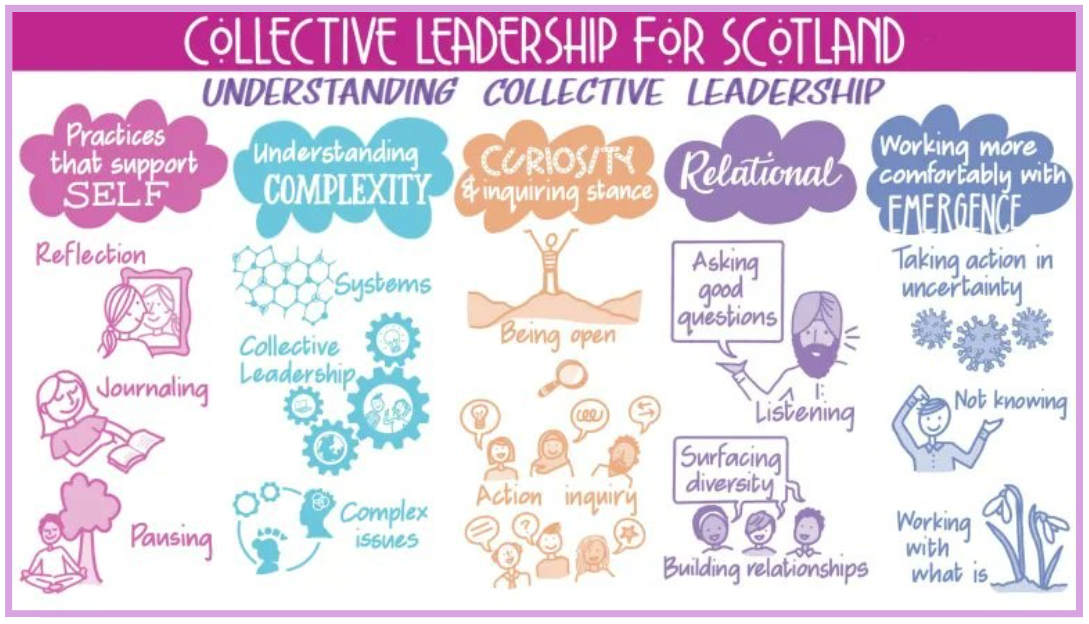
In complex change programmes such as ANEW, Collective Leadership is key and requires: fostering and practicing reflection and curiosity, embracing complexity and being open to emergence, taking a relational approach through active listening, suspending judgement, being open to receive and give feedback, building trust by following through etc..
-
Support from CELCIS CELCIS
supported the implementation team by providing training and coaching around implementation science, supporting the development of tools, and offering time and space to jointly reflect on programme activity and to plan ahead. We were also well placed to provide a container for diverse opinions and constructively challenge and disrupt mental models and approaches proven ineffective by evidence.
Recognising the complexity of the ANEW programme, CELCIS formed a team that was multi-disciplinary, with roles spanning across implementation consultancy, children's services planning and delivery (including allied health disciplines), data and research.
-
Developing the ANEW Community of Practice
A Community of Practice was formed by bringing together the teams from all three local areas involved in the ANEW programme, the CELCIS team and the Scottish Government. Before the COVID-19 pandemic, the ANEW Community of Practice met quarterly and was valued by its members due to the time and space created to share and reflect on progress and challenges, learn from each other, advance the development of tools and update the local plans. As convenor of the ANEW Community of Practice, CELCIS facilitated the collective reflection, captured the learning and strengthen members’ knowledge and skills in relation to the use of Active Implementation.
“Very useful as only opportunity to come together in a protected way, away from local area space, to reflect/consider a plan.”
“The support and time allowed the team to capture thoughts and plan. … I do feel frustrated at times on the progress but I think this is natural … and planning is key!”
“Reminded of the importance of being in it for the long haul and that implementation takes time.“
“Really good mix of theory, getting deeper and discussion regarding local application/difficulties/strengths.”
“Open dialog/debate, trust, respect, relationship, learning and understanding.”
(examples of anonymous feedback on the Community of Practice meetings)
Overall, our experience within the ANEW programme confirms that the ‘Enabling Context’ is a crucial element in the Formula for Success, which not only needs to be in place, but has to be strong and attended to at all times, in order to address the impact of unfavourable conditions and fluctuations.
Key Learning:
- In order to create and maintain readiness, there is a need to present the rationales and evidence underpinning the need for change, and discuss the dissatisfaction in relation to keeping the ‘system as is’.
- A cascading model of support, which includes a multi-agency implementation team is needed to drive and coordinate the change, and has to remain in place to sustain the innovation.
- Permissions, but also time, tools and resources must be provided to practitioners, to try and do things differently.
- Leadership commitment and engagement must be high throughout the change process, requiring leaders to meet periodically with the local implementation team, build and maintain a practice-policy feedback loop, and act promptly to remove barriers and enable the required change. Conducive conditions, rooted in the
- Collective Leadership and the Collective Impact frameworks, have to be created for leadership to continue to create alignment between competing agendas within a shifting political landscape (e.g. the ANEW work can help to create the health and wellbeing conditions needed for children to be present and engaged in learning).