


Welcome to our online resource. Here, you’ll find a range of information and resources offering an insight into CELCIS's complex change programme: Addressing Neglect and Enhancing Wellbeing (ANEW). The information, recordings, and other resources on this page detail how we used Active Implementation in Scotland to prevent child neglect and enhance wellbeing by supporting local multi-agency partners to strengthen early support for children, young people and their families. In the following sections, you’ll find some background to the programme, alongside detailed information about our evidence-informed approach to practice change.
Glossary
Some words or phrases have a specific meaning within the context of Active Implementation or refer to particular theories or practices. Definitions and explanations can be found on a specific glossary document when the word or phrase is {highlighted like this}.
Introduction
All children have the right to have their needs met. These include having loving, supportive relationships at home, enough food to eat, clean, proper clothing, shelter, support for learning, healthy growth and development, self-esteem, and healthcare. Evidence tells us that when a child’s emotional, physical and/or psychological needs are persistently not met, for whatever reason, areas of their health, development and growth can be seriously impacted. The effects on children and young people’s wellbeing and ability to thrive can last long into adulthood. This means that, over time, without effective early intervention, there can also be a greater demand on crisis-response and specialist services, which can impact on the availability of supports for children and families, at times when they are most in need.
In Scotland, it is recognised that there is more that must be done to strengthen the early support and reduce children and young people’s experience of neglect and its significant long-term effects on wellbeing. The Addressing Neglect and Enhancing Wellbeing (ANEW) programme, which ran with CELCIS support from 2017 – 2023, was born out of a need to address these concerns.
What is ANEW?
The ANEW programme was informed by existing evidence that highlighted the need to minimise the barriers to effective early intervention and focus on children and families in need of support, who may be known to services but falling just below the thresholds for formal measures to be taken. The evidence base included the findings of Christie Commission (2011) on the delivery of public services, the Brock Report (2014) on safeguarding vulnerable children, the work of Professor Brigid Daniels (2015) on noticing and responding to neglect, and the Child Protection Systems Review (2017).
In order to strengthen a preventative approach to child neglect and wellbeing concerns, the Scottish Government commissioned CELCIS to develop a programme to be delivered in partnership with local authority areas. CELCIS identified Active Implementation as the approach which would best suit this complex change programme and help bridge the gap between research and practice. The programme also employed a rights-based approach, aligned with the United Nations Convention on the Rights of the Child (UNCRC). Through these lenses, we aimed to identify the strengths and challenges across the whole system and support a more effective approach to enhance the supports for and the wellbeing of children in need of care and protection and their families.
The ANEW programme was launched in 2017, funded by Scottish Government as part of the Child Protection Improvement Programme. The team at CELCIS started by selecting and working alongside three local authority partner areas: Dundee, Inverclyde and Perth and Kinross.
An Active Implementation approach helps us to ensure that practice changes are sustainable over time, therefore, although CELCIS’s involvement in ANEW concluded in early 2023, the programme continues in Dundee, where the local implementation team works on scaling up and sustaining the practice changes. .
Using an implementation approach to strengthen practice for children and families: Learning from the ANEW programme
Active Implementation was relatively new in Scotland when ANEW was launched and we believe that what was learned over six years, including in relation to implementation, has relevance far beyond the programme. To share what was learned, we have developed this online resource designed to support anyone beginning, currently undertaking, or wishing to learn from a complex change programme to effect systematic change and strengthen the early support for children and their families. Here, you’ll find:
- An overview of the background to the ANEW programme, including the evidence and approaches that informed its development;
- The story of how, over six years, our team put Active Implementation’s frameworks into practice to support local multi-agency partners to develop their implementation capacity and expertise, and facilitate practice change to support real change for children and their families, using Dundee, one of the ANEW programme’s local authority partner areas, as a case study;
- Key learning, tools, and resources from the ANEW programme;
- A series of recorded and written reflections from frontline practitioners, senior managers, and others working at the heart of the programme.
This resource will be of particular interest to decision makers, funders and leaders who aim to enable complex change, but also to practitioners in the health and social care sector, but what was learned can be applied in various other settings.
Background to the ANEW programme
This background to the ANEW programme tells the story of how CELCIS built the groundwork towards complex systems change, bringing together the expertise, evidence and theory that underpinned the programme. It discusses why Active Implementation was identified as a suitable approach and what it involves. If you are not familiar with the theory around complex systems change or Active Implementation, we recommend you read this background before progressing to the next part of this resource.
The Journey of ANEW - Active Implementation in practice: strengthening practice for children and families
With the goal of the ANEW programme established, the evidence base in place and Active Implementation identified as the key approach, the first ANEW cohort was formed. With funding from the Scottish Government and expertise provided by CELCIS, three local authority areas – Inverclyde, Dundee and Perth and Kinross –each agreed to set up a local multi-agency implementation team and provide ongoing leadership support to ensure that capacity could be built at a local level to support and maintain the change efforts.
[possible vox pop] Dundee leader talking about their experience of working with CELCIS.
As the programme progressed, Dundee became the primary site, and CELCIS supported the local partners over six years to:
- Explore potential approaches to addressing neglect and enhancing wellbeing for children and young people, what needs to change and how to make the changes;
- Develop and agree on a design and a logic model to guide the change, and then test and implement practice and system changes;
- Build local capacity for employing an evidence-informed approach to support complex change.
To do this, CELCIS worked alongside the Dundee team to utilise ‘The Formula for Success’, a key element of the Active Implementation approach. The Formula for Success lays out the factors and stages needed to achieve the goals of a complex change programme such as ANEW - known as ‘Socially Significant Outcomes’.
CELCIS and the Dundee team worked through the formula with a view to achieving those outcomes for children and families. This involved establishing what needed to be implemented (‘Effective Practices’), how this was to be done (‘Effective Implementation’), and the environment and setting needed (‘Enabling Context’).
Read more about the Formula for Success
The story of how this was achieved is split into the corresponding sections of the Formula for Success below. In each section, the CELCIS and Dundee teams provide detailed reflections, insight, analysis and learning from the ANEW programme, representing the entire Active Implementation journey so far.
Moving forward, Dundee City Council and NHS Tayside continue the work of embedding and sustaining the change in several sites across Education, Early Years and Health Visiting in Dundee, remaining committed to reaching full implementation.
[The] “CELCIS [team] have really helped, as had we not had this approach and evidence behind us, I think we would have just gone into another silo. At the heart of this [ANEW work] is partnership working, which is also complex and requires tricky conversations, so we are working within both silos and partnerships, helping people to see and model how this can be moved forward. This is probably the most crucial element to the success of this work.
- Local Implementation Team member (anonymised quote)
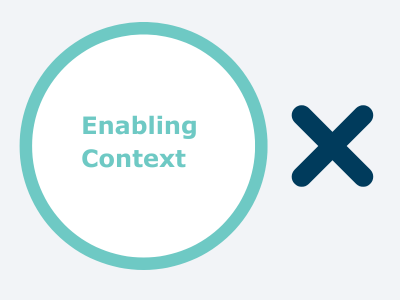
Also known as 'the Environment and Conditions needed'. Explanation here about what is in this section and what it will provide insight into.
Find out more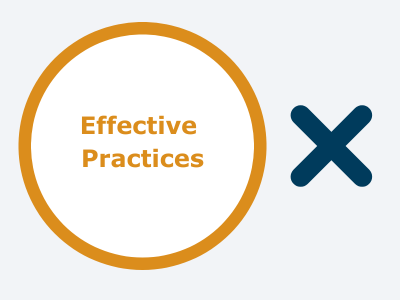
Also known as 'the What'. Explanation here about what is in this section and what it will provide insight into [more text here to pad out..................].
Find out more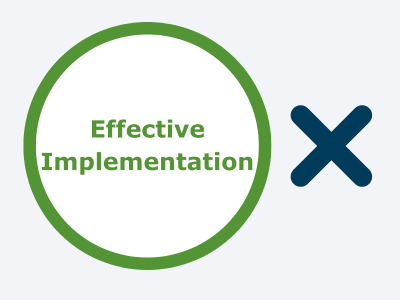
Also known as 'the How'. Explanation here about what is in this section and what it will provide insight into...
Find out more
Also known as 'the Improved Outcomes'. Explanation here about what is in this section and what it will provide insight into [more text here.................]
Find out moreResources
[a short sentence on who could use the resources in this section – practitioners: HVs, school staff; data officers; children’s services leaders]
FAQs (I have an idea to rework this PDF a bit, can bring it to the meeting next Tuesday)
ANEW webinar at CPCScotland Neglect series
Practice profile
GIC powerpoint
Briefing paper (TBC) Overview of data tools (?)
ANEW Meeting the Challenge (embedded link)
CELCIS briefing complexity lessons learnt (paper, published?)
Phased approach paper (paper, not sure if yet published)
Alex’s blogpost: https://celcis.org/knowledge-bank/search-bank/blog/2017/11/how-active-implementation-can-bring-about-lasting-change
GIRFEC refresh practice exemplar published by Scottish Government of Camperdown Buddy practice (https://www.gov.scot/publications/girfec-case-studies/pages/buddy-support/ )
Dundee’s logic model – to check with Kerstin
Further information Please contact celcis.protectingchildren@strath.ac.uk